
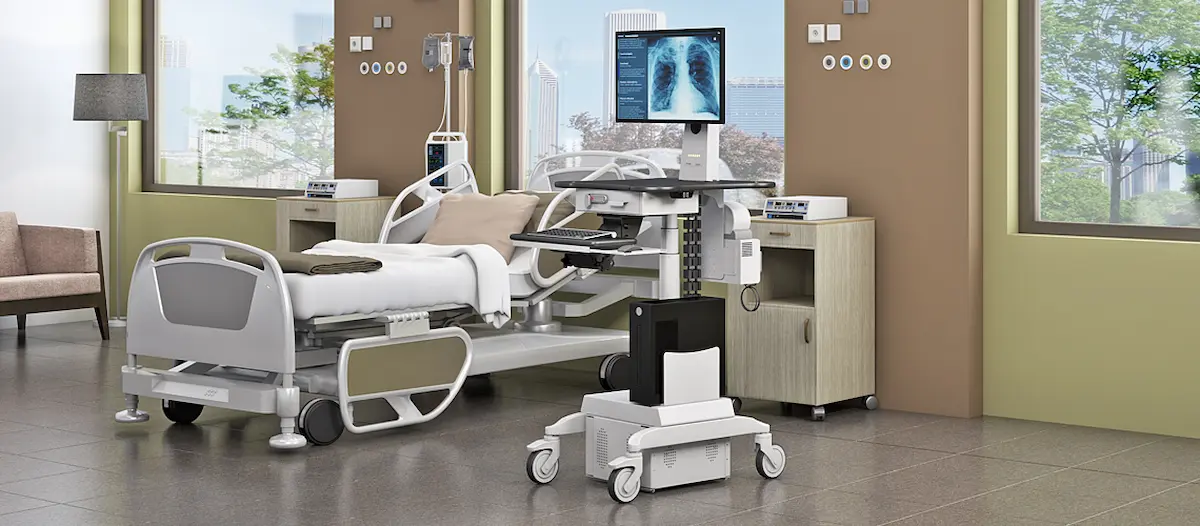
Mobile computer carts have become essential tools in Pennsylvania hospitals, fundamentally changing how healthcare professionals deliver patient care. These mobile workstations bring technology directly to the bedside, eliminating the need to walk back and forth between fixed stations. As a result, nurses and clinicians can document in real time while maintaining eye contact with patients.
When choosing the right mobile computer cart, it’s important to consider factors like mobility, adjustability, storage, and durability to ensure the solution fits your specific needs. The benefits of these carts matter in every healthcare environment, supporting efficient and comfortable work no matter the setting.
This article focuses specifically on Pennsylvania healthcare facilities and how mobile medical carts streamline daily operations. We’re speaking directly to healthcare administrators, IT managers, and clinical staff who need practical solutions for workflow efficiency. If you’re exploring ways to enhance productivity while improving patient outcomes, this guide covers what you need to know.
Here’s the direct answer: Mobile computer carts improve healthcare workflows by enabling point-of-care documentation, reducing medication errors, and cutting the time staff spend traveling to fixed workstations. Pennsylvania hospitals using these solutions report 10-20% reductions in patient visit times.
What you’ll gain from this article:
- Understanding of workflow efficiency improvements through mobility
- Cost savings analysis comparing fixed versus mobile workstations
- Patient safety benefits tied to real-time documentation
- Ergonomic advantages that reduce staff fatigue and strain
- Technology integration strategies for seamless implementation
Understanding Mobile Computer Carts in Healthcare Settings
Mobile computer carts are wheeled workstations equipped with computing equipment, monitors, power systems, and storage. They bring everything healthcare workers need directly to patients, supporting electronic health records access and medication administration at the point of care.
A mobile laptop cart is specifically designed to enhance mobility and functionality in various work environments, including healthcare, education, and industry. These carts adapt to the needs of dynamic workplaces, making them essential for improving productivity and ergonomic comfort.
Pennsylvania hospitals face unique challenges. Many facilities operate in older buildings with narrow corridors and uneven flooring. Additionally, the state’s participation in Health Information Exchanges means hospitals need secure, connected infrastructure. Quality manufacturing is crucial to ensure that mobile computer carts meet the unique needs of Pennsylvania hospitals. Mobile workstations address both needs effectively.
Hospital Mobile Computer Carts
Hospital mobile computer carts serve general workflows like rounds, nursing documentation, and lab result reviews. These laptop computer carts feature large wheels for effortless movement through hallways, docking stations for monitors, and secure drawers for supplies. Their ability to adapt to different tasks and users, along with the ease of transporting and using them, makes these carts highly flexible for various hospital needs.
Their explicit connection to patient care is significant. When nurses document at the bedside rather than at distant stations, they reduce errors and capture information more accurately. By bringing technology and tools directly to the point of need, these carts help reduce downtime and allow healthcare teams to stay focused on their tasks, enhancing productivity and supporting better clinical decisions.
Medical Mobile Computer Carts
Medical mobile computer carts handle specialized clinical applications. Telehealth carts include video conferencing hardware. Pharmacy carts feature secure compartments for medication dispensing. Imaging carts support diagnostic equipment. These carts offer convenience in healthcare settings by providing portability, adjustability, and organized storage, which enhance patient care and safety.
Infection control matters greatly in these environments. Consequently, medical mobile carts use antimicrobial surfaces and designs that minimize crevices where bacteria hide. Compliance with HIPAA, FDA regulations, and electrical safety standards ensures these devices meet Pennsylvania healthcare requirements.
Moving forward, let’s examine the specific features that make these solutions valuable for Pennsylvania facilities.
Key Features and Benefits for Pennsylvania Healthcare Facilities
Building on our understanding of cart types, Pennsylvania hospitals should evaluate specific features that directly impact daily use and longevity. In addition to basic mobility and computer support, many mobile computer carts offer supplementary features such as extra storage compartments and ergonomic designs that enhance user comfort and efficiency. Furthermore, mobile computer carts can accommodate a wide variety of laptop brands, sizes, and makes, making them versatile for different healthcare needs.
Mobility and Ergonomic Design
The wheel systems on quality mobile workstations use casters at least 125mm in diameter. This design enables smooth transitions across various floor surfaces common in older Pennsylvania buildings. Mobile computer carts are equipped with smooth-rolling wheels for easy transportation across different floor types, allowing users to easily transport their setup. Locking wheels secure carts in place during documentation tasks.
Height adjustability accommodates different users across shifts. Many mobile computer carts feature height-adjustable designs to promote ergonomic comfort for users of varying heights, allowing adjustments at the user’s fingertips for maximum comfort. Ergonomic features reduce strain and fatigue, leading to improved staff satisfaction. When healthcare workers experience less physical discomfort, they can focus more effectively on patient care.
Mobile computer carts are designed for maximum flexibility and ease of movement, making it easy for staff to work comfortably throughout their shifts.
Power Systems and Battery Technology
Modern power systems use LiFePO4 batteries offering 1,000-3,000 charge cycles compared to 300-700 cycles for older lead-acid technology. This difference translates to years of reliable service with proper maintenance.
Hot-swappable battery modules allow continuous operation—one battery works while another charges. Many models provide 8-14 hours of runtime, covering entire shifts without interruption. For Pennsylvania hospitals running around the clock, this reliability matters significantly. Advanced battery technology gives staff peace of mind, ensuring uninterrupted operation even in demanding environments. For example, Bretford’s MobilePro carts feature cordless battery power, enhancing mobility and efficiency.
Security and Compliance Features
Secure drawers with electronic locks protect medications and sensitive materials. Cable management systems prevent tripping hazards while maintaining clean workspace aesthetics. Mobile computer carts are constructed from durable, robust materials to ensure durability and withstand daily use in demanding healthcare environments—a critical factor when selecting the right cart. Auto-logout features protect patient data when carts sit idle.
HIPAA compliance requires physical, technical, and administrative safeguards for electronic protected health information. Quality mobile computer carts include these features by design, ensuring Pennsylvania hospitals meet regulatory requirements confidently through durable construction that supports long-term security and compliance.
Implementation Strategies for Pennsylvania Hospitals
Now that we’ve covered essential features, let’s focus on practical deployment within Pennsylvania healthcare environments.
When evaluating vendors for mobile computer carts, it’s important to consider those with a proven track record. AFC Industries PA has built long-standing relationships with customers by providing reliable solutions for a wide range of healthcare applications, including inpatient, outpatient, physician offices, pharmacy, and clinical labs. This experience ensures a smoother implementation process and ongoing support.
Deployment Process for Healthcare Facilities
Before purchasing, assess current workflows to identify where delays and errors occur. This evaluation reveals exactly where mobile solutions will create the greatest impact.
- Conduct workflow mapping to document current inefficiencies
- Define requirements based on department-specific needs (ICU, pharmacy, telehealth)
- Evaluate vendors prioritizing local manufacturers for faster service
- Train staff thoroughly on cleaning, power management, and security protocols
- Pilot in selected units before full deployment, measuring key metrics
Deploying mobile computer carts designed to support technology and tools directly at the point of need helps keep healthcare teams productive by reducing downtime.
Cost-Benefit Analysis
|
Factor |
Fixed Workstations |
Mobile Computer Carts |
|
Initial Cost |
Lower per unit |
Higher but includes mobility |
|
Maintenance |
Minimal moving parts |
Battery and caster maintenance |
|
Productivity |
Staff travel time lost |
Bedside documentation |
|
Staff Satisfaction |
Limited flexibility |
Improved ergonomics |
|
Patient Outcomes |
Documentation delays |
Real-time, accurate records |
Pennsylvania hospitals typically see ROI within 12-24 months through reduced labor costs and improved efficiency. The productivity gains from eliminating unnecessary walking alone justify the investment for many facilities. Additionally, mobile computer carts can support inventory management by providing ample storage space for laptops and essential accessories, keeping everything organized and within reach, which further enhances user experience and operational efficiency.
Common Challenges and Solutions for Healthcare Implementation
Every technology deployment faces obstacles. Many mobile computer carts come equipped with ample storage options for accessories, helping to address organizational challenges and improve productivity. Here’s how Pennsylvania hospitals successfully address common concerns.
Budget Constraints and ROI Concerns
Phased implementation reduces upfront costs while demonstrating value. Start with high-impact units like ICUs or medication administration areas. Track measurable outcomes—time saved, errors reduced—to build the case for expansion. Mobile laptop carts are designed to adapt to various environments, including home offices, making them a versatile investment.
Staff Training and Adoption Resistance
Involve frontline users in cart selection. Their input creates buy-in from day one. Hands-on training sessions and pilot programs help staff experience benefits directly. Many mobile computer cart models are the perfect solution for staff needs, as they come equipped with multiple shelves or compartments for convenient access to essential items. Recognition programs celebrate units achieving successful adoption.
Technology Integration Issues
Work closely with IT teams early in planning. Ensure carts connect securely to hospital networks without creating vulnerabilities. Choose models with standard VESA mounts accommodating various devices including tablets, laptops, and monitors.
Conclusion and Next Steps for Pennsylvania Healthcare Leaders
Mobile computer carts deliver measurable improvements in workflow efficiency, patient safety, and staff satisfaction for Pennsylvania hospitals. The technology has matured significantly, offering reliable power systems, ergonomic designs, and robust security features.
Your next steps:
- Assess current workflows to identify improvement opportunities
- Evaluate vendors with Pennsylvania-based support capabilities
- Plan a pilot program in one or two units
AFC Industries PA, located in Berwick, Pennsylvania, offers mobile workstation solutions designed for healthcare environments. Our team understands Pennsylvania hospital needs and provides local support throughout implementation.
Frequently Asked Questions
What is the typical cost range for hospital mobile computer carts?
Powered carts with battery systems typically range from $2,000-$6,000 depending on features. Non-powered models cost less but require proximity to outlets. AFC Industries PA offers various models to accommodate different budgets.
How long do mobile cart batteries last before replacement?
LiFePO4 batteries provide 1,000-3,000 charge cycles, translating to 3-5 years of daily use. Proper charging practices extend battery longevity significantly.
What infection control features should healthcare carts include?
Look for antimicrobial surfaces, sealed seams, and designs that allow thorough disinfection. Wheels and casters should clean easily. AFC Industries PA carts are built to withstand daily cleaning protocols.
How much training do staff members need?
Most users become comfortable within one shift. Training covers height adjustment, battery management, cleaning procedures, and security protocols. Contact our team to discuss training support options.
What ROI timeline should Pennsylvania hospitals expect?
Most facilities see positive returns within 12-24 months through reduced walking time, fewer documentation errors, and improved staff efficiency.
Do mobile carts work with existing EHR systems?
Yes. Quality mobile workstations integrate with standard hospital IT infrastructure. They connect via secure WiFi and support various authentication methods required by HIPAA compliance.
Can mobile carts accommodate different devices?
Modern carts use VESA mounts and flexible designs that accommodate monitors, laptops, and tablets. Explore our options to find solutions matching your device requirements.