
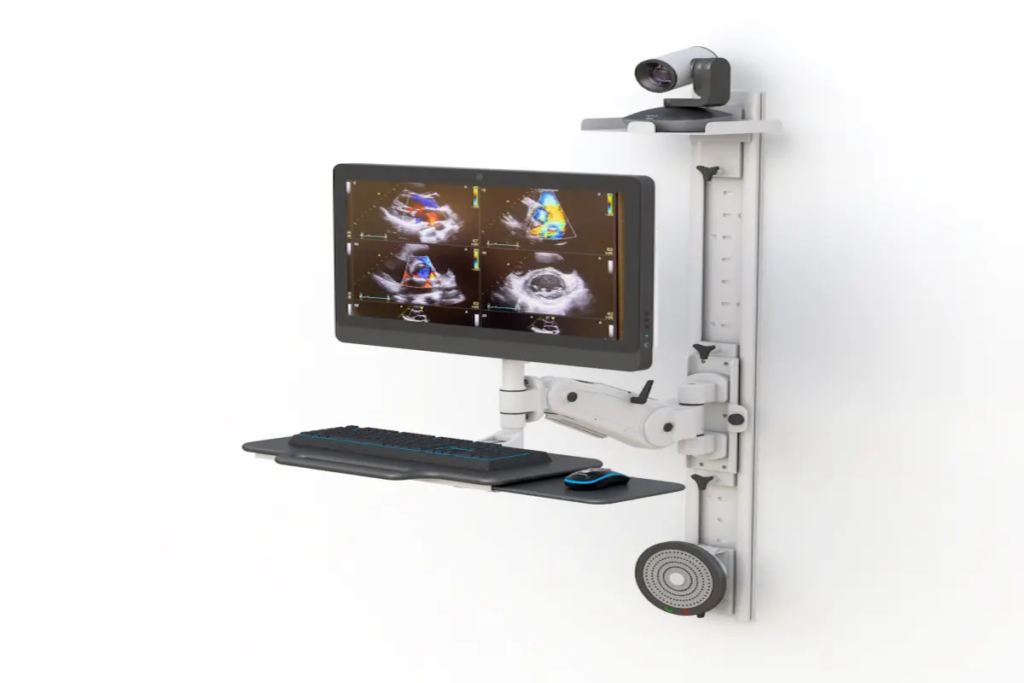
Why Ergonomic Products Matter for Comfort, Focus, and Long-Term Performance
|
⚡ Quick Summary • Ergonomic products are equipment and tools designed to fit how people actually move and work — not the other way around. Done right, they reduce injury, cut fatigue, and improve output without requiring staff to change how they do their jobs. • The highest-impact products are monitor arms, mobile workstations, keyboard trays, and industrial-grade ergonomic equipment — but only when they match the actual demands of the environment. • Ergonomic products deliver the most value as a coordinated system. A monitor arm paired with the wrong keyboard height creates a new problem while solving the old one. • Different environments need different solutions entirely. What works in an open-plan office is the wrong specification for a manufacturing floor or a clinical ward. • AFC Industries PA offers a full range of ergonomic products and an online product configurator to help spec the right setup for your environment. |
What Are Ergonomic Products and Why Do They Matter?
Ergonomic products are tools and equipment designed to match the natural posture, reach, and movement patterns of the person using them.
That definition sounds simple. The practical reality is harder. Most workplaces weren’t designed with ergonomics as a priority — they were designed around the available space, the cheapest compatible furniture, and whatever equipment was standard at the time. People then adapted to those setups, often without realising the adaptations were gradually damaging.
The US Occupational Safety and Health Administration (OSHA) identifies musculoskeletal disorders as one of the most significant and costly workplace health issues in the country — accounting for roughly 30% of all workers’ compensation costs. The majority of those injuries develop slowly, from sustained poor positioning rather than a single incident. Ergonomic products exist specifically to interrupt that process.
AFC Industries PA works with organisations across Pennsylvania to specify and supply ergonomic solutions that address real operational problems — not generic checklists. The difference between a product that improves a workspace and one that just looks ergonomic is whether it was chosen with the actual job in mind.
What Ergonomic Products Make the Biggest Impact?
The answer depends entirely on the environment. An ergonomic product that transforms a clinical ward setup might be completely irrelevant in a data centre. The table below maps the six main product categories to the environments and problems where they deliver the most measurable value.
|
Product Type |
Problem It Targets |
Best-Fit Environment |
Impact Level |
|
Adjustable Monitor Arms |
Neck, shoulder & eye strain |
All screen-based roles |
High — posture corrected immediately |
|
Mobile Workstations & Carts |
Unnecessary travel & static posture |
Healthcare, industrial, field work |
High — reduces repetitive movement |
|
Keyboard Trays & Input Aids |
Wrist strain & RSI from typing |
Any role with 2+ hrs typing daily |
High — RSI prevention, immediate relief |
|
Industrial Ergonomic Equip. |
Injury risk in physical tasks |
Manufacturing, warehousing, logistics |
Very High — safety & compliance impact |
|
Storage & Organisation |
Time lost searching, awkward reaches |
Labs, clinics, assembly stations |
Medium — workflow and audit improvement |
|
Integrated Ergo Systems |
Fragmented setup, mixed fit |
Full workstation builds across sectors |
Very High — total system coherence |
1. Adjustable Monitor Mounts and Arms
Screen position is responsible for more workplace neck and shoulder injuries than almost any other single factor in desk-based work. The problem is consistent: monitors placed too low, too close, or at an angle that forces sustained lateral rotation. Sustained is the operative word — a neck held slightly forward for eight hours a day creates the same cumulative load as carrying a weight.
Cornell University’s ergonomics research found that a correctly set monitor arm reduces cervical spine loading by up to 45% compared to a fixed stand. That translates directly into fewer end-of-day headaches, less reported neck stiffness, and noticeably better posture during the last two hours of a shift — which is when most errors in knowledge work occur.
AFC Industries PA carries single-arm, dual-arm, and track-mounted monitor configurations through the ergonomic mounts range.
2. Mobile Workstations and Carts
In healthcare, the ergonomic problem isn’t usually the workstation height — it’s the distance between where the work happens and where the equipment lives. Clinical staff walk an average of four to five miles per shift. A significant portion of that movement is unnecessary: going back to a fixed workstation to log information that was just collected at the bedside, carrying equipment that should travel with the user, or standing at a cart height designed for someone six inches taller.
Mobile workstations solve a fundamentally different problem than fixed ergonomic furniture. They bring the equipment to the task instead of requiring the worker to return to the equipment. That’s not just an efficiency gain — it directly reduces the cumulative physical load on clinical and industrial staff across a full shift.
AFC Industries PA’s computer carts and medical carts are designed with height adjustment and mobility as primary specifications, not afterthoughts.
3. Keyboard Trays and Input Accessories
Typing injuries develop slowly and are almost entirely preventable with the right setup. The UK Health and Safety Executive estimates RSI-related productivity loss costs British employers around £300 million annually — a figure driven mainly by sustained keyboard use at incorrect heights and angles. In the US, OSHA data shows similar patterns.
A keyboard tray’s job is to position the input device so the wrists are neutral — not flexed upward, not angled inward, forearms roughly level. That sounds minor. Over 200 working days a year, the difference between a neutral and a poor wrist position is the difference between a healthy hand and a repetitive stress injury requiring treatment and time off.
4. Industrial Ergonomic Equipment
Industrial ergonomics is a different discipline from office ergonomics, and the two get conflated too often. The loads are different. The risk profiles are different. The durability requirements for equipment are completely different.
On a manufacturing floor or in a warehouse, the ergonomic problems involve lifting, carrying, sustained standing, and reaching. Anti-fatigue matting reduces the strain of standing on concrete for eight-hour shifts. Ergonomic lift assists reduce the injury risk from repetitive manual handling. Height-adjustable assembly stations allow workers of different heights to perform precise tasks without compensatory bending. These aren’t comfort upgrades — they’re safety interventions, and they’re reflected in workers’ compensation data in organisations that invest in them.
AFC Industries PA’s industrial product range covers heavy-duty ergonomic equipment built for the demands of manufacturing and logistics environments, not repurposed from office specifications.
5. Storage and Organisation Solutions
Reaching past the natural comfort zone for a tool that should be within arm’s reach sounds trivial. Do it 200 times a day and it’s a shoulder injury waiting to happen. Disorganised storage forces workers to adopt awkward postures to retrieve items — twisting, overreaching, bending repeatedly to a low position.
In laboratories and clinical settings, storage organisation also has an accuracy dimension. A technician who has to search for the right instrument is a technician who’s also distracted from the task requiring precision. Purpose-built storage accessories that keep the right items in the right place at the right height serve an ergonomic function and a quality-control function simultaneously.
6. Integrated Ergonomic Systems
Individual ergonomic products improve things incrementally. An integrated ergonomic system changes how a workstation functions entirely.
The failure mode to avoid: buying a monitor arm to fix neck strain, but not adjusting the keyboard height to match the new screen position. The arm solved one problem and introduced another. Or installing height-adjustable desks without training staff to actually use the height adjustment — which happens more often than most facilities managers would admit.
AFC Industries PA builds full ergonomic workstation systems by combining accessories, mounts, and carts into a single specified configuration. The product configurator is the starting point for that process.
How Do You Choose the Right Ergonomic Products?
The organisations that get ergonomic procurement wrong usually do so in one of two ways. Either they buy based on what looks ergonomic — mesh chairs, standing desk mats, a branded monitor arm — without assessing the actual source of discomfort. Or they identify one problem correctly and fix only that, leaving the surrounding setup unchanged in ways that partially or fully negate the improvement.
Work through these six questions before committing to any ergonomic purchase:
|
# |
Question |
Why It Matters |
|
1 |
Where exactly is the discomfort or inefficiency happening right now? |
Don’t buy ergonomic products to tick a box. Buy them to fix a documented problem. |
|
2 |
Which users will interact with this station, and how different are they? |
A setup optimised for one person becomes a hazard for another if adjustment range is limited. |
|
3 |
How physically demanding is this role — light-touch office or heavy industrial? |
Industrial ergonomic equipment has different load and durability specs. Office-grade products fail fast under industrial conditions. |
|
4 |
Does this product adjust for the full range of users at this station? |
Weight limits, height ranges, and tilt angles need to cover the realistic spectrum of your team. |
|
5 |
Will this still work if the workflow or team changes in 12 months? |
Modular and adjustable products protect the investment when requirements shift. |
|
6 |
Does it integrate with the rest of the workstation without creating gaps? |
One ergonomic product that conflicts with everything else around it creates new friction. |
How Do Ergonomic Products Work Together as a System?
There’s a reason physicians don’t treat symptoms in isolation. The same logic applies to workstation ergonomics. A monitor arm set to the right height with a keyboard that’s still sitting flat on the desk surface creates a visual ergonomic improvement and a physical contradiction.
The setup that delivers real results is one where the height of the screen, the position of the keyboard, the depth of the seat, and the location of the most-used tools are all calibrated together. That’s not complex — but it requires thinking about the workstation as a system rather than a collection of individual products.
AFC Industries PA’s product configurator lets you map individual products to a full workstation spec, identify compatibility gaps, and see how the components interact before anything is ordered. For setups requiring custom-built elements, the custom products range covers bespoke specifications alongside standard ergonomic solutions.
How Do Ergonomic Products Improve Efficiency and ROI?
The Washington State Department of Labour and Industries tracked ergonomic interventions across a wide range of industries and found that organisations recovered an average of $3.60 for every dollar spent — through reductions in workers’ compensation claims, absenteeism costs, and measurable productivity loss. That’s the aggregate figure. In industries with high manual handling — logistics, manufacturing, healthcare — the returns are considerably higher.
There’s also a subtler gain that rarely appears in ROI calculations: error reduction. Fatigue degrades accuracy. A clinical staff member at the end of a physically demanding shift is more likely to make documentation errors. An assembly worker with sore shoulders is less precise on quality-critical tasks. Ergonomic products reduce the fatigue load that creates those conditions — which is why the productivity improvement is real even in roles where output isn’t directly measured in units per hour.
Where Are Ergonomic Products Most Valuable?
Different environments have genuinely different ergonomic problems. The table below breaks down what matters most in each setting — and why the same product set doesn’t translate cleanly across them.
|
Environment |
Key Ergonomic Products |
Why It Matters Here |
|
Office / Hot-Desk |
Monitor arms, keyboard trays, cable mgmt for shared stations |
Posture variation between users; chair height and screen distance drift without adjustable mounts |
|
Healthcare |
Mobile carts, antimicrobial-rated accessories, point-of-care mounts |
Clinical staff walk 4–5 miles per shift; equipment that travels with them cuts unnecessary steps |
|
Industrial / Mfg. |
Anti-fatigue matting, tool-reach stations, ergonomic lift assists |
Repetitive manual handling is the leading cause of musculoskeletal injury on the floor |
|
IT / Data Centre |
Rack-height monitor arms, seated/standing stations, cable management |
Long diagnostic sessions at fixed heights lead to fatigue that increases error rates |
|
Laboratory / QC |
Height-adjustable benches, anti-vibration mounts, reach-zone storage |
Precision tasks require stable, correctly positioned surfaces — fatigue degrades accuracy fast |
What Real-World Use Cases Show Their Impact?
- Hot-desking offices: The main ergonomic problem isn’t the equipment itself — it’s that the equipment is set up for the last person who used it. Adjustable everything is the only workable solution when multiple people share a single station across shifts or days.
- Outpatient and inpatient healthcare: Mobile carts that travel with clinical staff eliminate the return-to-fixed-workstation trips that accumulate into miles of unnecessary walking per shift. Height-adjustable surfaces at point-of-care reduce the sustained bending that causes back injuries in nursing roles.
- Manufacturing and assembly: Repetitive manual handling is the leading cause of musculoskeletal injury on the production floor. Ergonomic lift assists, reach-optimised tool stations, and anti-fatigue surfaces don’t just reduce injury rates — they improve throughput by keeping workers physically capable across a full shift rather than fatiguing by mid-afternoon.
- IT operations and diagnostic roles: Long sessions at fixed monitor heights produce fatigue that directly increases error rates. This is well-documented in IT support and diagnostic imaging environments where sustained visual attention is required. Adjustable monitor arms and sit-stand workstation options address this more effectively than scheduled breaks alone.
How Do Ergonomic Products Support Scalable Workspaces?
Ergonomic products that are modular and adjustable scale in a way that fixed solutions don’t. A monitor arm that accommodates screens from 17 to 34 inches covers equipment upgrades for years. Height-adjustable surfaces that serve users from 5’2” to 6’4” don’t need to be replaced when the team changes.
This isn’t just about future-proofing. It’s about not having to make a separate purchasing decision every time a role changes, a team member is replaced, or a workflow is restructured. Adjustable ergonomic products absorb those changes without requiring capital expenditure to address them.
AFC Industries PA’s ergonomic range is designed to integrate with our track mount systems — so components added later mount to the same rail system already installed, rather than requiring new wall fixings or furniture modifications.
How Much Do Ergonomic Products Cost?
Pricing varies significantly by product category and environment specification. Here’s a realistic breakdown:
- Monitor arms: $40–$350 depending on weight capacity, articulation range, and mounting type. Dual-arm configurations run higher.
- Mobile carts and workstations: $300–$2,000+ depending on height adjustment mechanism, surface size, power access, and clinical-grade material requirements.
- Keyboard trays and input accessories: $50–$200 for a quality ergonomic model with tilt range. Budget versions cut corners on the adjustment range that makes them effective.
- Industrial ergonomic equipment: $200–$5,000+ depending on load rating and application. Anti-fatigue matting starts at the lower end; custom lift-assist stations at the higher.
- Storage and organisation accessories: $50–$500+ depending on locking, surface material rating, and compliance specification.
- Integrated ergonomic systems: $500–$3,000+ per station for a fully specified multi-product setup. Volume purchasing significantly reduces per-unit cost.
For organisations outfitting multiple workstations, the per-unit economics of ergonomic investment improve substantially. A 10-station office ergonomic build with AFC Industries PA typically costs less per station than the average workers’ compensation claim for a single RSI injury. Contact the team for a quote built around your specific station count and environment.
Conclusion: Ergonomics Is Not a Perk — It’s an Operational Decision
The organisations that treat ergonomic products as a wellness gesture — something to add after budget is spent on “real” equipment — consistently pay more in injury costs, absenteeism, and productivity loss than the ergonomic investment would have cost.
The organisations that treat it as an operational decision — which workstation configuration reduces injury risk, which mobile setup cuts unnecessary movement on the floor, which monitor arm eliminates the neck strain that causes errors in the last hour of a shift — see measurable returns. Not eventually. Usually within the first year.
AFC Industries PA is a Pennsylvania-based specialist in ergonomic workspace solutions. We are not affiliated with AFC Industries — we are an independent Pennsylvania company focused specifically on ergonomic equipment, custom workspace builds, and industrial workstation solutions. Explore the full range on our shop, build your setup with the product configurator, or get in touch to discuss your specific requirements. Learn more about the company on the About Us page.