
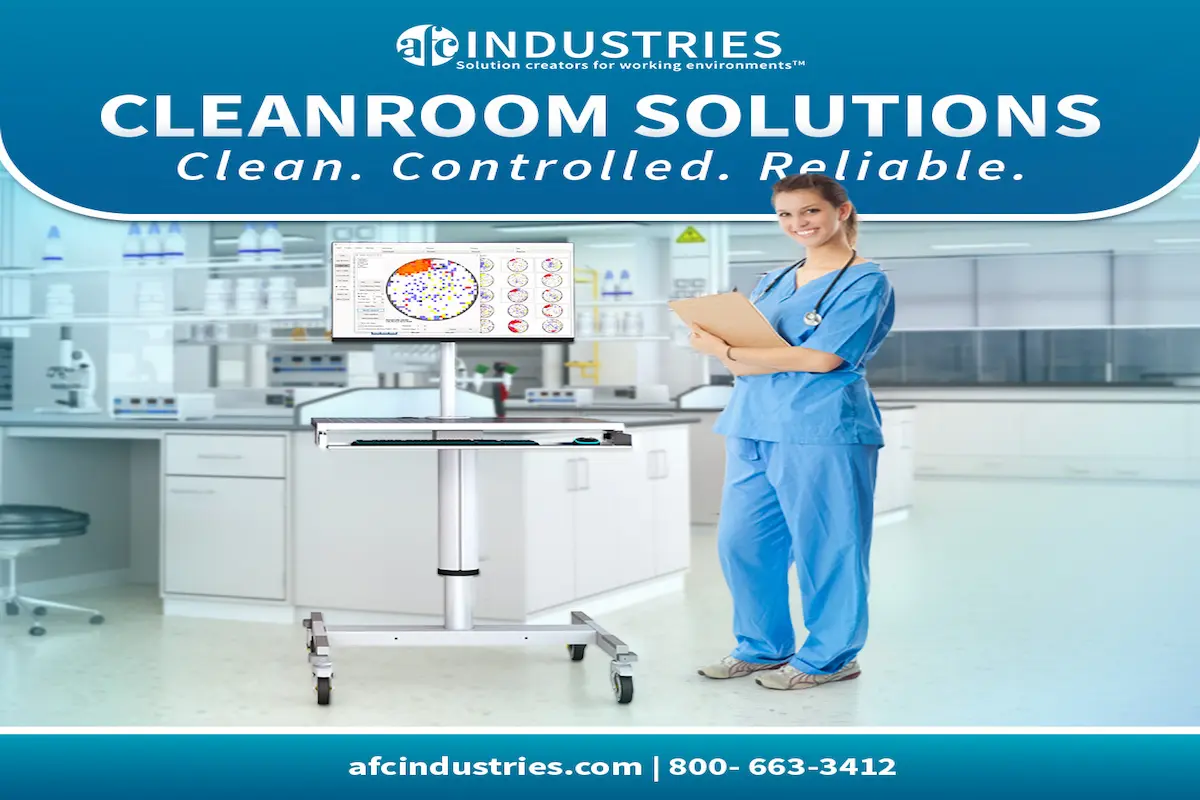
Cleanroom solutions are comprehensive contamination control systems designed to maintain strict environmental standards in manufacturing facilities. For Pennsylvania-based pharmaceutical, medical device, and semiconductor industries, these systems are essential for product quality and regulatory compliance.
This guide covers the types of cleanroom solutions available to PA manufacturers, their applications, and the implementation process. Whether you’re a facility manager, quality control professional, or business owner in Berwick, Pennsylvania, or the surrounding areas, understanding these systems helps you make informed decisions.
Direct Answer: Cleanroom solutions combine high efficiency particulate air (HEPA) filtration, environmental monitoring, temperature and humidity control, and strict protocols to limit airborne microbes, dust, and aerosol particles per cubic meter—all aligned with ISO class requirements.
What You’ll Learn:
- Different cleanroom solution types and their applications
- Selection criteria based on industry standards
- Pennsylvania-specific regulatory compliance requirements
- Step-by-step implementation strategies
- Cost considerations and ROI calculations
Understanding Cleanroom Solutions
Cleanroom solutions function as complete contamination control ecosystems. They’re engineered to create a controlled environment where particles, pollutants, and contaminants are systematically removed and monitored.
In Pennsylvania, industries like biotechnology, pharmaceutical manufacturing, aerospace, and medical device production rely heavily on cleanroom technology. Additionally, semiconductor solutions require ultra-clean environments where even microscopic dust particles can cause product failures.
Core Components of Cleanroom Solutions
HEPA and ULPA filters form the foundation of any cleanroom. HEPA filters remove 99.97% of particles 0.3 micrometers or larger. Meanwhile, ULPA filters capture even smaller contaminants. These filters maintain air quality by continuously cycling and purifying airflow.
Environmental monitoring systems track temperature, humidity, and pressure differentials in real time. This ensures the cleanroom meets ISO 14644 standards and FDA compliance requirements. Furthermore, these systems alert personnel when conditions drift outside acceptable ranges.
Cleanroom Classification Standards
ISO 14644 establishes cleanroom classification levels from ISO Class 1 (the strictest) to ISO Class 9. Each class specifies maximum particle counts per cubic meter at various particle sizes.
For example, pharmaceutical sterile filling typically requires ISO Class 5. Medical device assembly often uses ISO Class 7 environments. Packaging operations commonly work within ISO Class 8 standards. Understanding these classifications directly influences which solution type your Pennsylvania facility needs.
Types of Cleanroom Solutions for Pennsylvania Facilities
Pennsylvania manufacturing companies have several options when implementing cleanroom products. Each type offers distinct advantages depending on your operations, budget, and timeline.
Modular Cleanroom Solutions
Modular systems use prefabricated panels assembled on-site. They’re ideal for PA businesses seeking rapid deployment without extensive construction. These custom cleanrooms can be reconfigured as production needs change.
Cost effectiveness makes modular solutions attractive for growing companies. Installation typically takes weeks rather than months. Plus, you can expand or relocate these systems with relative ease.
Softwall Cleanrooms
Softwall cleanrooms use flexible vinyl curtains suspended from steel frameworks. They’re commonly found in electronics assembly, pharmaceutical packaging, and scientific research applications across Pennsylvania.
These systems offer quick installation and easy reconfiguration. However, they’re generally suitable for ISO Class 7 or 8 applications where ultra-strict contamination control isn’t critical. The flexible design allows personnel and equipment to move efficiently.
Hardwall Cleanroom Solutions
Hardwall cleanrooms provide permanent installations with superior contamination control. They’re engineered for critical Pennsylvania biotechnology applications and pharmaceutical production requiring the highest standards.
These systems integrate seamlessly with existing facility infrastructure. Cleanroom ceilings, walls, and floors create airtight environments. Though construction costs are higher, hardwall solutions deliver long-term reliability for demanding operations.
Portable and Mobile Cleanroom Solutions
Sometimes, instant cleanroom solutions are necessary. Portable units serve during maintenance periods, emergencies, or short-term projects. Pennsylvania companies testing cleanroom requirements often begin with rental options.
Mobile cleanrooms can be deployed in approximately three weeks. This flexibility supports clinical trials, pilot production runs, and temporary capacity needs.
Cleanroom Solution Implementation and Selection Process
Selecting and implementing the right solution requires careful planning. Work closely with cleanroom experts who understand Pennsylvania’s regulatory environment and climate challenges.
Assessment and Planning Procedure
Before implementation, conduct a thorough evaluation:
- Contamination risk analysis – Identify particle sources and critical control points
- Regulatory requirement review – Understand FDA, ISO, and Pennsylvania Code Title 28 requirements
- Space and workflow evaluation – Map personnel movement, material flow, and equipment placement
- Budget and timeline planning – Balance capital costs against operational expenses
- Vendor qualification and selection – Choose partners with Pennsylvania expertise
For customized cleanroom solutions tailored to your specific needs, contact AFC Industries PA to discuss your facility requirements.
Solution Comparison Matrix
|
Criterion |
Modular |
Hardwall |
Softwall |
|
Installation Time |
2-8 weeks |
2-6 months |
Days to 2 weeks |
|
Cost Range |
$150-350/sq ft |
$300-700/sq ft |
$100-300/sq ft |
|
Flexibility |
High |
Low |
Very High |
|
ISO Class Capability |
5-8 |
4-8 |
7-8 |
|
Maintenance |
Moderate |
Lower |
Higher |
This comparison helps Pennsylvania manufacturers choose appropriate solutions. Your decision should balance immediate needs against long-term operational goals.
Common Challenges and Solutions in Pennsylvania Cleanroom Implementation
Pennsylvania’s unique regulatory environment and variable climate create specific challenges for cleanroom operations.
Regulatory Compliance Challenges
FDA validation requirements demand thorough documentation. Pennsylvania Code Title 28 §25.12 mandates specific ventilation, pressure, and contamination control standards for drug and device manufacturing. Cleanroom hygiene solutions must address both federal and state requirements.
Working with experienced cleanroom monitoring solutions providers ensures your facility passes inspections. Documentation and validation protocols should be established from the beginning.
Climate Control in Pennsylvania’s Variable Weather
Pennsylvania experiences hot, humid summers and cold, dry winters. These extremes challenge HVAC systems maintaining precise temperature and humidity levels.
Energy-efficient designs using variable-speed fans and energy recovery systems help control costs. Proper insulation and sealing prevent air infiltration during extreme weather, ensuring optimal performance year-round.
Budget and ROI Concerns
Cleanroom cleaning solutions and maintenance represent ongoing investments. However, contamination prevention delivers significant savings by reducing product rejects, recalls, and downtime.
Explore AFC Industries’ clean room solutions to find cost effective options that meet your quality requirements without exceeding budget limits.
Conclusion and Next Steps
Cleanroom solutions represent essential investments for Pennsylvania manufacturers committed to excellence. Whether you operate in pharmaceutical, medical device, semiconductor, or biotechnology industries, proper contamination control protects your products, reputation, and compliance status.
Take Action Now:
- Conduct a contamination risk assessment for your facility
- Research PA cleanroom solution providers with local expertise
- Request a facility evaluation from AFC Industries
- Develop a realistic implementation timeline
Frequently Asked Questions
What cleanroom class do I need for my Pennsylvania facility?
Classification depends on your industry. Pharmaceutical sterile operations typically require ISO Class 5, while medical device assembly commonly uses ISO Class 7. AFC Industries can assess your specific needs and recommend appropriate solutions.
How long does cleanroom installation take in PA?
Softwall systems install within days. Modular hardwall cleanrooms typically require 2-8 weeks. Permanent hardwall construction may take several months including design and validation phases.
What are the ongoing costs of cleanroom maintenance?
Annual maintenance typically runs 15-35% of initial capital costs. This includes HEPA filter replacement, environmental monitoring, cleaning protocols, and gown supplies.
Do cleanroom solutions require special permits in Pennsylvania?
Yes, permanent installations require building permits and state health department oversight for drug and device manufacturing. Temporary softwall structures may have fewer requirements depending on local codes.
Can existing facilities in PA be converted to cleanrooms?
Absolutely. Renovations add envelope materials, HVAC upgrades, and validation systems. Many Pennsylvania manufacturers successfully convert existing spaces rather than building new facilities.
What training is required for cleanroom operations?
Personnel need training on gowning procedures, cleaning protocols, environmental monitoring, and documentation requirements. FDA cGMP regulations mandate training records and ongoing competency verification.
Looking for cleanroom solutions tailored to your Pennsylvania manufacturing needs? Browse AFC Industries’ complete product selection or contact our team for personalized guidance.